Inventory unit conversion guide
How to Track Stock When You Buy in Cartons and Sell in Pieces
A practical inventory unit conversion guide for Indian retailers, wholesalers, distributors, FMCG stockists, pharmacies, food businesses, hardware merchants, manufacturers and multi-location teams.
For Indian merchants who buy in cartons, boxes, tins, rolls or bundles but sell in pieces, kg, litre, dozen or metres.
QUICK ANSWERS
Keep one quantity underneath
What is 1 carton of 24 pieces?
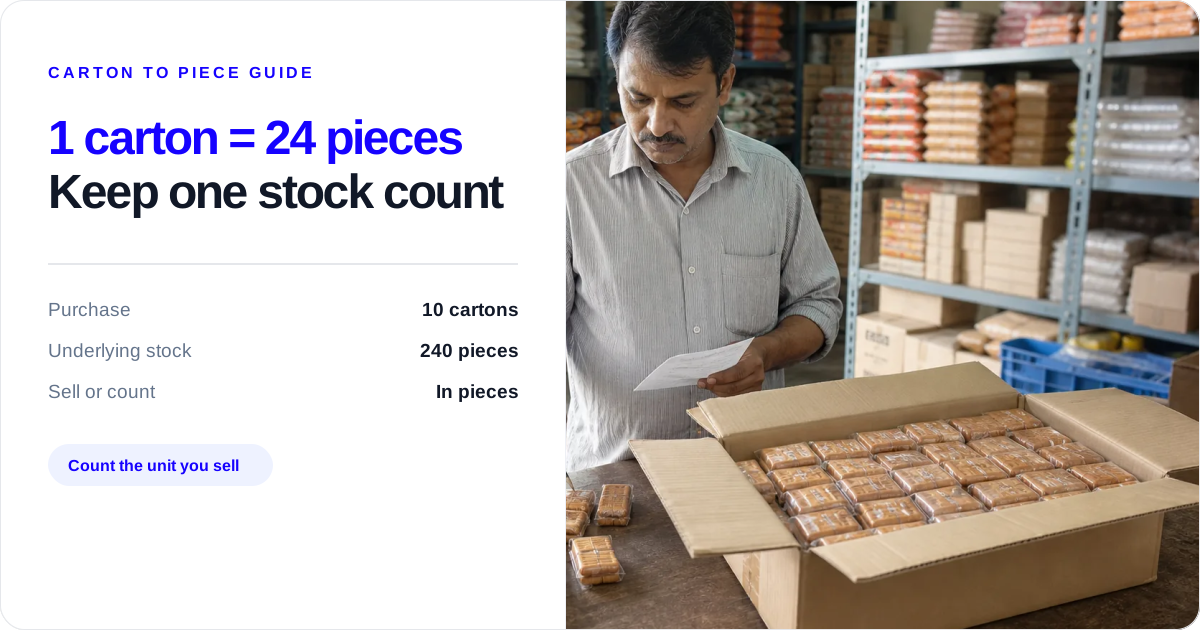
One carton is 24 pieces. Ten cartons received become 240 pieces in the stock balance.
Which unit should I use for a sale?
Bill the unit the customer receives: 7 pieces for seven loose pieces, or 24 pieces for one full carton.
What should I count at closing?
Count in the same base unit used by the item record, such as pieces, kg or litre.
Who checks the physical quantity?
You or the person handling that shop or godown must confirm the actual goods.
When you buy in cartons and sell in pieces, define the pack conversion once, record each purchase and sale in the unit used at that moment, and keep one stock balance underneath. For example, if 1 carton contains 24 pieces, 10 cartons received means 240 pieces in stock; a sale of 7 pieces leaves 233 pieces, or 9 cartons and 17 pieces when you pack the shelf.
This matters whether you open cartons at a retail counter, dispatch FMCG stock to shops, sell strips or tablets at a pharmacy, measure kilograms or litres in a food business, sell bundles in a hardware shop, or issue material by metre or piece in a factory. That single relationship is the basis of stock unit conversion. Your item name, pack size, unit and location must agree before you trust the quantity.
Set the first quantity before daily entries with the opening-stock entry guide. When the same unit problem appears on a bill and the shelf count, read the billing and inventory guide.
Why carton-to-piece stock goes wrong
The arithmetic is easy. The handoff is where errors start.
- Your purchase team says “20 boxes,” while your counter person hears “480 pieces.”
- Your salesperson bills 12 pieces but someone in the godown removes one carton without recording the 12-piece difference.
- A return comes back as one open carton, but nobody counts the pieces inside.
- The same item is entered once as
boxand once aspiece, creating two balances. - Your branch reports 3 cartons while you see 72 pieces and both sides think the other number is wrong.
Before saving any entry, write the item, pack size, unit, quantity and store or godown. “Biscuit stock” is not enough. “Chocolate biscuit, 24 pieces per carton, 7 pieces, Mansarovar Shop” gives you and your godown team the same thing to check.
How to calculate inventory unit conversion
Use this simple calculation:
Stock in smaller units = number of larger units × smaller units in each larger unit
For one carton containing 24 pieces:
| Entry | Calculation | Stock change |
|---|---|---|
| Purchase inward | 10 cartons × 24 pieces | +240 pieces |
| Customer sale | 7 pieces | -7 pieces |
| Customer return | 2 pieces checked and accepted back | +2 pieces |
| Physical count | 233 pieces counted | Compare with 235 recorded pieces |
After the purchase, sale and return, the recorded balance is 235 pieces. If you count 233 pieces in the godown, do not immediately change the number. First check whether the 2-piece difference came from a sale, breakage, open carton, wrong unit, wrong location or an entry that was never made.
Keep one base unit for the item. Pieces work well when cartons are opened regularly. For a liquid or loose product, litres or kilograms may be the base unit. A carton is then the buying or packing unit, not a second unrelated stock pool.
What to record at purchase, sale, return and count time
Purchase inward: count the received pack
Match the supplier bill with the physical delivery. Record the item, pack size, larger-unit quantity, price and receiving location. If 10 cartons arrive and each carton contains 24 pieces, the inward is 240 pieces after conversion. If one carton is short by 2 pieces, note the received quantity separately and settle the supplier difference before treating all 10 cartons as complete.
In Stock Register, you can buy in boxes or cartons and sell in pieces, with a purchase such as 10 cartons of 24 pieces showing 240 pieces. You can also use kg, litre, dozen, box, bundle, metre and custom units. You still have to confirm the printed pack size and what physically came in.
Sale outward: bill in the unit the customer receives
If your customer takes 7 pieces, bill 7 pieces. Do not bill 1 carton unless the customer actually receives a full carton. Before saving, ask your counter person to check the item, selling unit, quantity and shop or branch.
If your shop sells both full cartons and loose pieces, tell your team which unit to select for each order. A full-carton sale is 24 pieces in this example; a loose sale is the actual number of pieces. Your stock balance should fall by the same underlying quantity.
Customer return: count before adding anything back
Match the return to the original bill and count what came back. Two pieces returned against a seven-piece sale are two pieces, not one carton. Keep crushed, opened, leaking or questionable goods aside until you decide whether they can go back to saleable stock.
When you save the return, Stock Register records the selected quantity. It does not inspect the goods or decide whether a returned piece is safe, complete or fit to sell.
Physical count: count the unit on the shelf
Choose one unit for the count and write it at the top of the sheet. If you track the item in pieces, count loose pieces and the full cartons as pieces: 8 sealed cartons × 24 pieces + 5 loose pieces = 197 pieces. Compare 197 with the recorded piece balance, then investigate the difference before making a correction.
Do not compare 8 cartons with 197 pieces. That is a unit mismatch, not proof of missing stock.
If the unit is correct but a sale still leaves the item below zero, use the negative-stock troubleshooting guide to check the supplying location and recent movement before adjusting it.
One example: 1 carton = 24 pieces
Example figures: Suppose you supply the Mansarovar shop from your Jaipur FMCG godown. You receive 10 cartons of snack packs, with 24 pieces in each carton, so the inward quantity is 240 pieces. During the day, the shop sells 7 pieces, a customer returns 2 pieces, and you count 8 sealed cartons plus 5 loose pieces at closing.
| Stage | Quantity in the stock record | What you check |
|---|---|---|
| Supplier inward | 240 pieces | 10 cartons received; 24 pieces per carton; bill and godown match |
| Customer sale | 233 pieces left | 7 pieces billed from the shop |
| Customer return | 235 pieces recorded | 2 pieces counted and matched to the sale |
| Physical closing count | 197 pieces found | 8 sealed cartons × 24 + 5 loose pieces |
The closing difference is 38 pieces. That is not a reason to edit the record from memory. Check whether the godown count covers the shop’s 38 pieces, whether a transfer or sale was recorded at another location, whether someone used cartons instead of pieces, and whether any opened or damaged pieces were kept aside.
How to find whether the mismatch is unit, quantity, location or billing
Use these checks in this order. They keep a small disagreement from becoming a full-day recount.
| If the mismatch looks like this | Check first | Next action |
|---|---|---|
| 10 cartons versus 240 pieces | Unit and pack size | Convert both numbers to the same base unit |
| Record says 235 pieces; shelf has 233 | Physical quantity and unrecorded outward movement | Recount, check sale/return/stock-out entries, then decide on a correction |
| Shop says 38 pieces are missing; godown says they are present | Store or godown | Check the supplying location and any transfer record |
| Bill shows 1 carton; customer received 7 pieces | Billing unit and quantity | Match the invoice to the actual handover and correct the document under your business process |
| Same item appears under two unit names | Item master and unit naming | Choose one item record and one conversion rule; stop using the duplicate name |
In Stock Register, open the item ledger to see transaction history with date, transaction type, party or store name, quantity in or out and running balance. Use the ledger to trace a recorded purchase, sale, return, transfer or adjustment. It cannot tell you whether the loose piece is behind the carton, damaged, already handed to a customer or counted twice.
Examples beyond FMCG
The unit changes by business, but your handoff stays the same: write the supplier’s pack, choose the unit you count, and record where you keep the goods.
| Business | Common conversion | The practical difference |
|---|---|---|
| FMCG stockist or retailer | Carton or box to pieces | Open cartons at the counter and sell loose pieces |
| Pharmacy or medical shop | Box to strips or tablets | One supplier pack may become two selling units |
| Food business | Tin to litre or sack to kg | Decimal quantities matter when goods are measured out |
| Hardware shop | Box or bundle to pieces; roll to metres | A partly opened pack or roll must still have one clear balance |
| Manufacturer | Roll to metres; raw material to pieces | Material issued and finished goods may use different units |
| Multi-location merchant | Carton at godown to pieces at shop | The same quantity must remain traceable across a transfer |
Pharmacy: strips, tablets and boxes
Decide what you sell the medicine as and what the supplier bill contains. If a box has 10 strips, and each strip has 10 tablets, make sure your counter knows whether the customer order is for boxes, strips or tablets. You or the responsible pharmacist must check the label, batch, expiry and local dispensing rules. The unit record helps with quantity; it does not replace the medicine check.
Food business: kilograms and litres
If you run a restaurant, you may buy oil in 15-litre tins and use litres in the kitchen. If you sell dry fruit, you may receive 25 kg and sell 0.5 kg. For stock measured in kg and litre units, record the received amount, the unit used for each outward entry and the scale reading. Keep decimal quantities consistent, and verify the weighing when you receive the goods.
Hardware: boxes, bundles and pieces
If you run a hardware shop, you may buy 5 boxes of screws and sell loose pieces, or buy cable in rolls and sell metres. Write the pieces per box or metres per roll on the item record and train your counter person to bill the unit the customer receives. For a partly opened box or roll, count what remains in the base unit.
Manufacturer: raw material and finished goods
If you manufacture goods, you may buy fabric by roll or metre, issue buttons by piece and sell finished goods by piece. Record the material issued and the finished quantity using the units your plant actually counts. Unit conversion can keep the quantity record consistent; production yield, wastage and final quality checks still belong to your own process.
What you can record in Stock Register—and what you still need to verify
In Stock Register, you can record multiple units of measurement, convert cartons or boxes to pieces, track purchases, sales, returns, transfers and adjustments, and follow an item ledger with the quantity and running balance. Use Stock Tracking to record these units and movements.
You or the person handling each location must still verify:
- the printed pack size and actual received quantity;
- the unit used on the supplier bill and customer invoice;
- the quantity inside an opened carton, box, tin, roll or bundle;
- the shop, branch or godown where the stock physically sits;
- the condition, batch, expiry or weighing requirement where relevant; and
- the reason and supporting document before a physical-count correction.
When you save an entry, Stock Register records it. It does not reconcile a shelf count automatically, approve a return, decide a quality hold, or promise that a full carton is saleable just because the converted quantity is present.
A simple daily unit check
Before the first inward, sale or dispatch, agree on four things: item, pack size, unit and location. At closing, ask whoever handles each location to report the base-unit count for fast-moving items. Once a week, open a small sample of cartons and confirm the pieces per carton have not changed across suppliers or pack versions.
When you change a pack size, create a clear item or conversion record before the next purchase or sale. Do not change “1 carton = 24 pieces” to “1 carton = 20 pieces” halfway through old stock without checking how the earlier entries should be understood.
Find the source of the mismatch
| What you see | Check first | Next step |
|---|---|---|
| Cartons versus pieces | Pack size and base unit | Convert both to one unit |
| Record is higher than shelf | Count and recent outward entries | Investigate before correcting |
| Shop is short; godown has stock | Store and transfer record | Confirm where stock sits |
| Bill says carton; customer got pieces | Invoice and handover | Correct under your process |
Cartons versus pieces
- Check first
- Pack size and base unit
- Next step
- Convert both to one unit
Record is higher than shelf
- Check first
- Count and recent outward entries
- Next step
- Investigate before correcting
Shop is short; godown has stock
- Check first
- Store and transfer record
- Next step
- Confirm where stock sits
Bill says carton; customer got pieces
- Check first
- Invoice and handover
- Next step
- Correct under your process
What you can record in Stock Register
- Multiple units of measurement, including cartons or boxes to pieces, kg, litre, dozen, bundle, metre and custom units.
- Purchase, sale, return, transfer and adjustment movements with recorded quantities.
- Item ledger details with transaction type, party or store name, quantity in or out and running balance.
You and the people handling each godown or shop must still verify the pack, physical quantity, location, condition, batch or expiry, and the reason for any correction.
Related resources
Frequently Asked Questions
How do I track inventory when I buy in cartons and sell in pieces?⌄
Set one conversion for the item, such as 1 carton = 24 pieces, and keep the underlying stock in one unit. Record the purchase as cartons converted to pieces, bill the customer in pieces, and count the shelf in pieces. Recheck the printed pack size whenever a supplier changes the pack.
What is the formula for carton-to-piece inventory?⌄
Multiply cartons received by pieces in each carton. Ten cartons with 24 pieces each equals 240 pieces. Use the same base unit for sales, returns and physical counts, and write the pack size beside the item so you do not compare cartons with pieces.
Can Stock Register handle buying in boxes and selling in pieces?⌄
Yes. In Stock Register, Stock Tracking supports multiple units of measurement, including buying in boxes or cartons and selling in pieces, with 10 cartons of 24 pieces showing 240 pieces. Confirm the item’s pack size and physical quantity yourself; Stock Register records the entry you save.
How should I record a return when only some pieces come back?⌄
Count the pieces that came back and record that quantity against the original sale where your process allows. Keep damaged, opened or questionable goods separate until you decide what is saleable. Stock Register records the return quantity when you save it; you still check the condition and the correct customer or supplier document.
How do I find a stock mismatch caused by the wrong unit?⌄
Write both numbers in the same unit first. Then check the item name, pack size, location, recent purchase, sale, return, transfer and adjustment entries. Open the item ledger in Stock Register to see recorded movement and running balance. You or your godown team must still recount the physical pieces and confirm what left the shelf.
Can I use kg, litre, dozen or custom units for stock?⌄
In Stock Register, Stock Tracking includes kg, litre, dozen, box, bundle, metre and custom units alongside pieces. Choose the unit your team can count or measure consistently, record the pack relationship clearly, and verify the scale, label or bundle contents during inward and physical checks.